
Menu
Story
Our journey
Founding story
On the twelfth day of our wonderful journey through enchanting Sri Lanka, we arrived at our accommodation just in time for sunset. The previous leg of our journey was a kaleidoscope of new impressions, fascinating encounters, and a flood of colors and scents. After an eight-hour train ride from Peradeniya to Ella and another sixty minutes, partly on bumpy off-road trails, we were exhausted, but also overwhelmed with happiness and contentment.
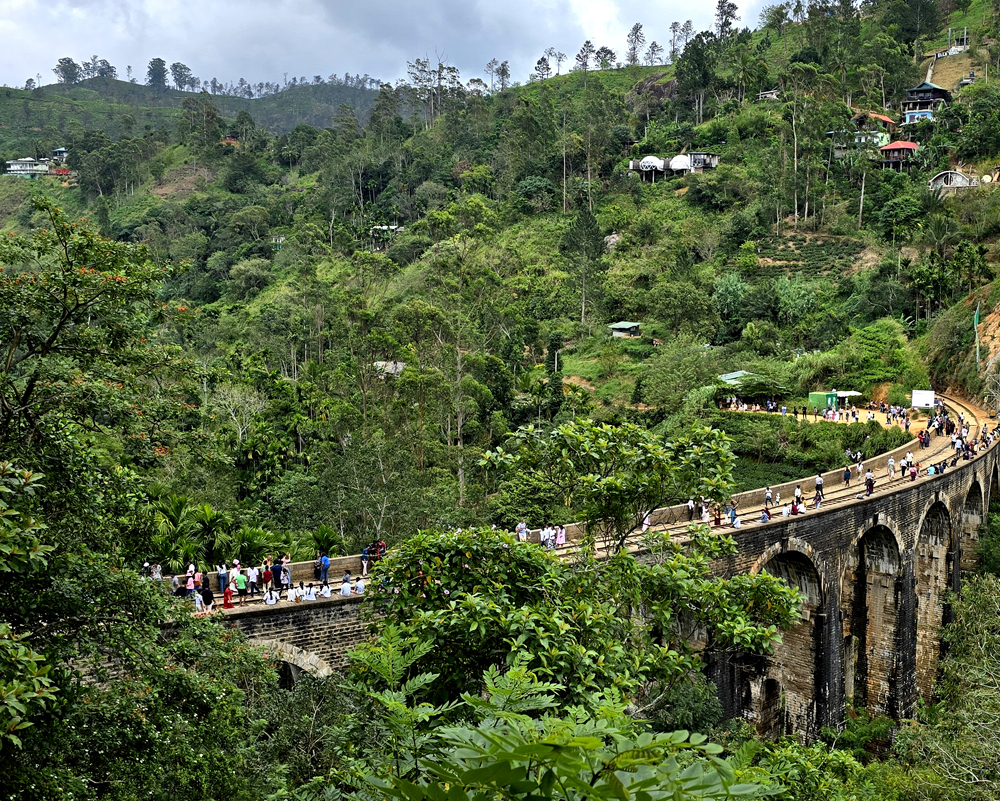
The train ride itself was an experience that allowed us to gaze deep into the soul of this country. It was a hot day, a hot day, even for Sri Lankan standards. We traveled through lush, green landscapes, past endless tea plantations that stretched across the hills like an emerald sea. The train’s windows and doors were wide open, and the fragrant air flowed in as we took in the passing scenes. Children waved to us from the villages along the route, and we returned their cheerful greetings with a smile.
When we finally arrived in Ella, another adventure awaited us. Our driver, a friendly local invited us into his sturdy off-road vehicle. The journey took us along narrow, winding roads that wound through the mountains. At times, the road was so bumpy that we felt like we were on a wild ride. But the breathtaking views of the surrounding valleys and mountains made up for every bump.
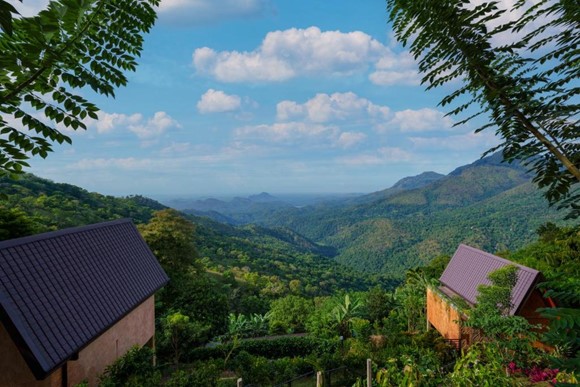
After sixty minutes, we finally reached the Majentra accommodation, nestled like a hidden gem in the mountain. Surrounded by tea plants and a natural garden full of exotic trees and flowers, it felt like a paradise on earth. From the moment we arrived, we were enchanted by the property’s verdant surroundings and felt as if we had entered a peaceful paradise. The fatigue of the long journey melted away as we breathed in the fresh, clear air and absorbed the beauty of the surroundings. We were exhausted, but also overwhelmed with happiness and contentment. The journey had not only challenged us physically, but also enriched us emotionally. Every moment was a new adventure, every encounter a joy. And now, in this idyllic accommodation, we felt at home—ready to experience the next chapters of our adventure.
Wild monkeys were familiar to us by now. We had often seen them, swinging skillfully through the trees or perched on the side of the road, their curious eyes fixed on us. But when we got out of the car and a pair of porcupines greeted us, we were surprised and fascinated. The two animals, with their spiny backs and round snouts, seemed to be eyeing us up just as curiously as we were eyeing them. It was an unexpected but beautiful welcome that brought a smile to our faces.
Scarcely had we recovered from this unusual reception when three lodge staff approached us. Their faces radiated a warmth and friendliness typical of the people of Sri Lanka. They greeted us with open arms; their warmth was so genuine and deep that we immediately felt welcome. It was as if we were old friends reunited after a long time. This genuineness and warmth seemed to come from deep within their hearts and touched us in a way that was difficult to put into words.

While we completed the check-in paperwork, we made ourselves comfortable on the terrace. From there, we were treated to a breathtaking view. The air was warm, spicy, and clear, filled with a vibrant stillness permeated by the countless sounds of nature. The setting sun transformed the colors every minute, and we saw what felt like a thousand different shades of green. Every glance revealed new details—the delicate leaves of the tea plants, the colorful blossoms of the flowers, the many different trees swaying gently in the breeze.
It was a moment of perfect harmony. Nature around us seemed to be in a perpetual dance, and we were part of this dance. The sounds of the birds, the rustling of the leaves, the buzzing of the insects—all of it blended into a symphonic melody that captivated us.

The first time SRI
Majith, one of the gracious hosts, approached us with a radiant smile. In his hands, he held a tray containing warm, damp towels and a drink in sparkling crystal glasses. The towels he handed us exuded a floral, soothing scent and felt like a gentle hug on our skin, lifting the fatigue of the long journey.
The drink he offered us afterward was magnificent. It shone in a mesmerizing blend of gold and amber. The crystal glasses in which it was served sparkled in the light, giving the drink a precious, almost magical aura. With each movement of the glasses, the ice cubes created a gentle clinking sound
It reminds me of the rhythmic sounds of a percussion instrument and conjures a soothing, ever-changing melody into the air.
The aroma of the drink was subtle. A slightly spicy-sweet note wafted into our nostrils, evoking memories of distant spice markets but also, paradoxically, of home, during Christmas.
When we finally took a sip, the flavor unfolded on our tongues – definitely cinnamon, but with a depth and complexity that surprised us. It was as if we had captured the essence of this moment, indeed of all of Sri Lanka, in a single sip – light, natural, yet full of depth. It refreshed our bodies and stimulated our minds. It was invigorating yet calming at the same time.
Everything was perfect. The moment seemed infinite, as if time itself stood still. Life was free of burdens and negative thoughts, and there was only the here and now. We sat on the terrace, surrounded by the breathtaking beauty of nature, and felt completely at peace with the world.
Even during the trip, inspired by the delicious drink Majith had served us, we began to create our own variations. Using a simple tea kettle and cinnamon sticks, we experimented to find the right flavor. We experimented with additional ingredients, such as green or black tea, lemon, and many different Ceylon cinnamon sticks. It’s important to note that not all Ceylon cinnamon is created equal. There are many varieties, just as we have many different types of apples.
Every cinnamon, every sip was a new discovery, a journey for the senses that immersed us deeper in the culture and traditions of Sri Lanka.
We talked a lot with the locals about this type of drink. Their stories and wisdom enriched our understanding and appreciation of this centuries-old tradition. They told us about the origins of the drink, the special variations and ingredients used, and the rituals associated with it. These conversations were not only informative but also deeply connecting. They created a bridge between us and the people of this wonderful country.
Preparing and drinking the drink became a ritual for us. It was more than just refreshment; it was a moment of reflection and enjoyment.
It was a ritual that slowed us down, gave us strength and energy, and reminded us to appreciate life’s simple pleasures.
This ritual, inspired by a centuries-old tradition from Sri Lanka, became an integral part of our trip. It was a symbol of the deep connection we had built with this land and its people.
After returning home, we wanted to continue this ritual to keep the memories of our Sri Lanka trip alive.
Our Vision
Giving back what inspires us.
For us, SRI is more than a drink. It’s an idea: sustainable enjoyment that refreshes and benefits body and mind.
SRI is your drink for in between meals – as an alternative to water, a healthy substitute for soft drinks, or even as a daily ritual.
We donate at least 1% of our sales to social projects in Sri Lanka – with a focus on sustainability, education, and environmental protection.
Benefits of Ceylon Cinnamon
Not all cinnamon is the same.
We only use genuine Ceylon cinnamon, which is native to Sri Lanka and is characterized by its mild, delicate aroma.
Good to know: Ceylon is the former name for Sri Lanka.
Ceylon cinnamon, also known as Cinnamomum verum or “true cinnamon,” contains valuable compounds such as cinnamaldehyde and eugenol, which offer numerous health benefits. This cinnamon can help regulate blood sugar levels and has anti-inflammatory, antioxidant, and digestive properties. It can also positively influence lipid metabolism.
For those who want to know more: We are not medical professionals and therefore do not offer health advice. If in doubt, always consult your doctor.
We have researched the following for you without liability.

A randomized clinical trial in type 2 diabetics showed that daily consumption of 1–6 g of cinnamon for 40 days led to a significant reduction in fasting blood sugar levels, as well as triglycerides and LDL levels (Khan 2003). These effects are attributed to improved insulin sensitivity and reduced insulin resistance—both important factors in the treatment of diabetes.
Cinnamaldehyde, the main compound in cinnamon, specifically inhibits pro-inflammatory enzymes. A systematic review highlights that Ceylon cinnamon can modulate chronic inflammation, a key risk factor in cardiovascular disease, autoimmune diseases, and metabolic syndromes (Ranasinghe 2013).
An analysis of 26 spices identified cinnamon as one of the most antioxidant-potent spices, with a high content of phenolic compounds that neutralize free radicals (Shan 2005). This can reduce cell damage and counteract the aging process.
A placebo-controlled study showed that cinnamon extract significantly reduced fasting blood glucose, body mass index (BMI), and LDL cholesterol in overweight prediabetics (Qin 2010). The “good” HDL cholesterol level remained unchanged, indicating the selective effect of cinnamon on the lipid metabolism profile.
In another clinical study, taking 2 g of Ceylon cinnamon per day for 12 weeks in patients with type 2 diabetes reduced systolic and diastolic blood pressure by several mmHg – particularly in people under 50 years of age (Akilen 2012).
Studies show that cinnamon oil and cinnamaldehyde are effective against various bacteria and fungi. The inhibition of E. coli, Staphylococcus aureus, and Candida albicans was particularly noticeable (Chang 2001). This effect could make cinnamon useful as a natural support for infections – for example, in the digestive tract or on the skin.
In vitro studies have shown that cinnamon extract inhibits the aggregation of tau proteins—a key factor in the development of Alzheimer’s disease. At the same time, the formation of amyloid-β plaques was reduced (Peterson 2009). Although these findings are currently limited to cell models, they indicate potential neuroprotective potential—particularly in the context of impaired glucose utilization in the brain (“type 3 diabetes”).